
Porcelain Tile for Bathrooms: How to Choose a Floor and Shower Tile That Lasts
If you are redoing a bathroom, you will hear the same advice from almost everyone: use porcelain. It is good advice. But "porcelain" covers a huge range of tile, and not every porcelain tile belongs on every surface. A tile that is perfect on a shower wall can be slippery on the floor, and even the best tile will not save a bathroom if the layer underneath it is wrong.
Here is how to choose porcelain tile for bathrooms that will still look and work right years from now, drawing on guidance from MSI, whose tile we carry.
Why porcelain is the standard for bathrooms
The difference between porcelain and ordinary ceramic tile comes down to how much water the tile itself absorbs. MSI puts porcelain at half a percent or less by weight, the most water-resistant class of tile there is. Typical ceramic tile absorbs somewhere between three and seven percent.
In a room that goes from dry to steamy several times a day, that gap adds up. Porcelain is dense and fired at high temperatures, so it does not swell, warp or harbor mold inside the tile. It also does not need sealing, it stands up to bathroom cleaners, it works over radiant floor heat, and MSI estimates a realistic lifespan of fifty years or more with normal care.
Ceramic still has a place. On a powder room wall or anywhere water does not sit, it can be a perfectly good choice. For a shower or a bathroom floor that gets wet every day, porcelain is the safer long-term pick.
The tile is rarely what fails
This is the part most product descriptions skip. Porcelain resists water at the tile. The grout lines between the tiles do not stop water on their own, and neither does the tile once water gets behind it.
That is why a shower or wet floor needs a dedicated waterproofing membrane installed on the wall or floor underneath the tile. MSI is blunt about it: a missing or failing membrane, not the tile itself, is the most common reason showers and bathroom tile fail. The damage builds slowly and out of sight, in the subfloor and framing, often for years before anyone notices.
When you are comparing installation quotes, ask what waterproofing goes under the tile in the shower and on the floor. It is not a glamorous question, but it is the most important one.
Grout is the part you maintain
Since the tile itself needs no sealer, the maintenance in a porcelain bathroom is almost all grout. Standard cement grout should be sealed when it is installed and resealed every year or two.
In a shower, it is worth asking about epoxy grout. MSI notes that it resists mold, staining and moisture far better than cement grout and stretches out how often you need to do anything to it. For a shower floor that gets used every day, that is a real difference in upkeep.
Floors: two numbers to check
A bathroom floor is the one surface where the tile's ratings really matter, because it gets wet and you walk on it barefoot. Ask to see two ratings on the product sheet.
Slip resistance. This is measured on a wet surface. MSI recommends a wet slip resistance rating of at least 0.42 for any bathroom floor, which is the industry minimum for wet indoor floors. For a shower floor, or a bathroom planned for aging in place, MSI suggests looking for a higher rating.
Wear rating. Often listed as a PEI rating, this measures how well the surface stands up to foot traffic. PEI III is the minimum for a home bathroom floor.
The two are separate. A tile can be very hard-wearing and still be slippery when wet, so check both. The finish plays a big part too: matte and textured surfaces grip, and polished ones are best kept on the walls. We go deeper on that in polished vs matte tile.
Floor tile and wall tile are not interchangeable
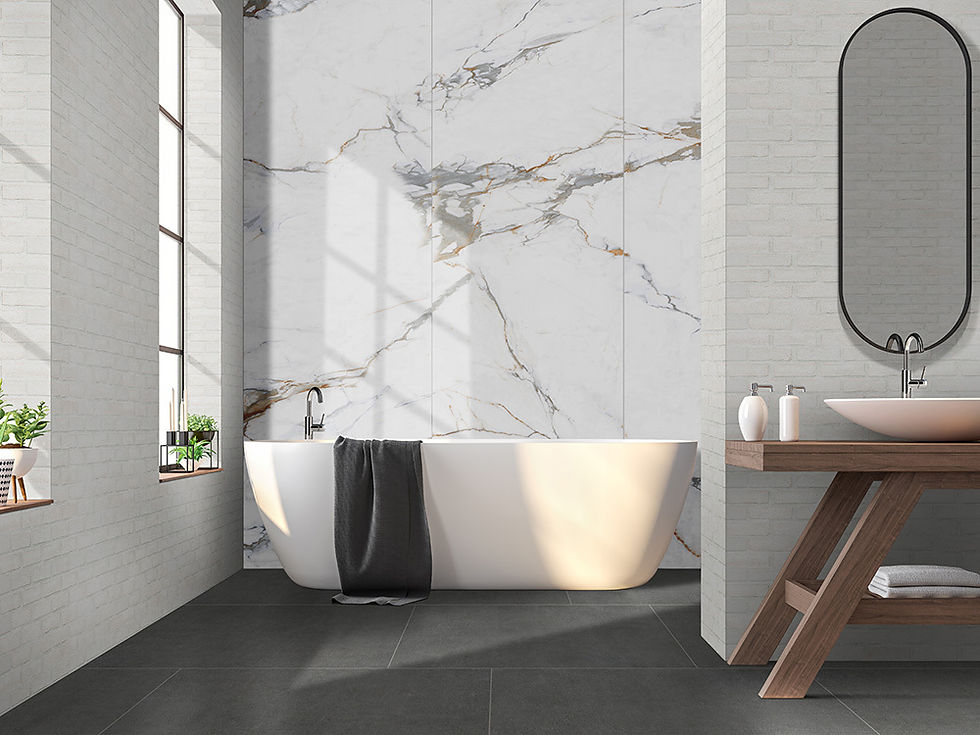
MSI's first rule of buying is simple. Wall tile is often thinner and lighter, and it is not made or rated for foot traffic. Using a floor-rated porcelain on a wall is fine. Using a wall tile on a floor is not always safe.
So if you fall in love with a tile for the shower wall and want to carry it across the floor, check that it is floor-rated, and in a matte or textured version, before you order.
Matching the tile to each part of the room
The bathroom floor. A matte or honed porcelain with the ratings above. Most home bathrooms use tile in the twelve by twelve to twenty-four by twenty-four inch range, and twelve by twenty-four is a common favorite because it makes the room feel bigger without demanding a perfectly flat subfloor.
The shower floor. Small mosaics, roughly two to four inches, are the better choice here. More grout lines mean more grip on a sloped surface, and the mesh-mounted sheets follow the slope to the drain. We compared tile sizes in more detail in mosaic vs large format tile.
Shower walls and tub surrounds. This is where you have the most freedom. No one stands on a wall, so polished, glossy, matte or textured finishes all work. Larger tiles or porcelain slabs mean fewer grout lines to clean.
Looks that do not cost you performance
Porcelain comes in almost any look, and the ratings stay the same whatever it is made to look like.
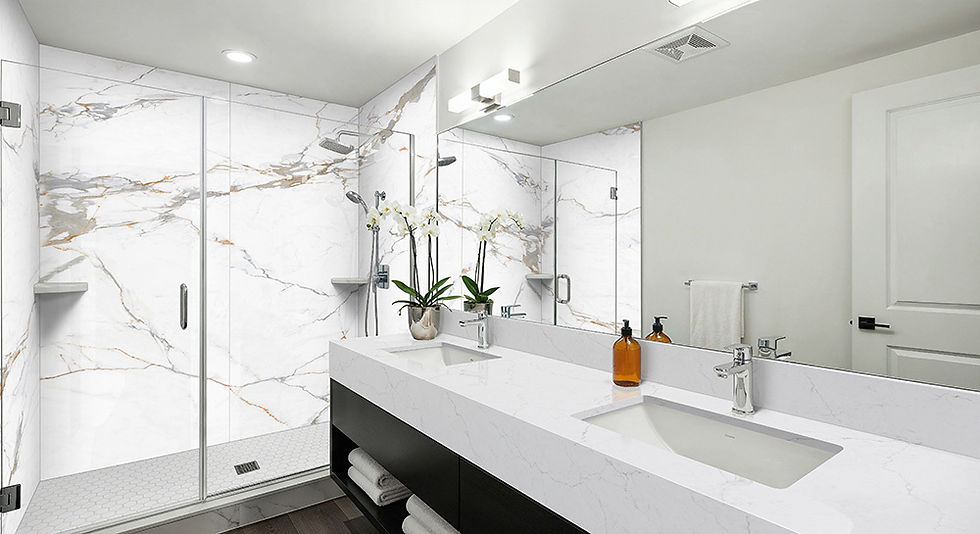
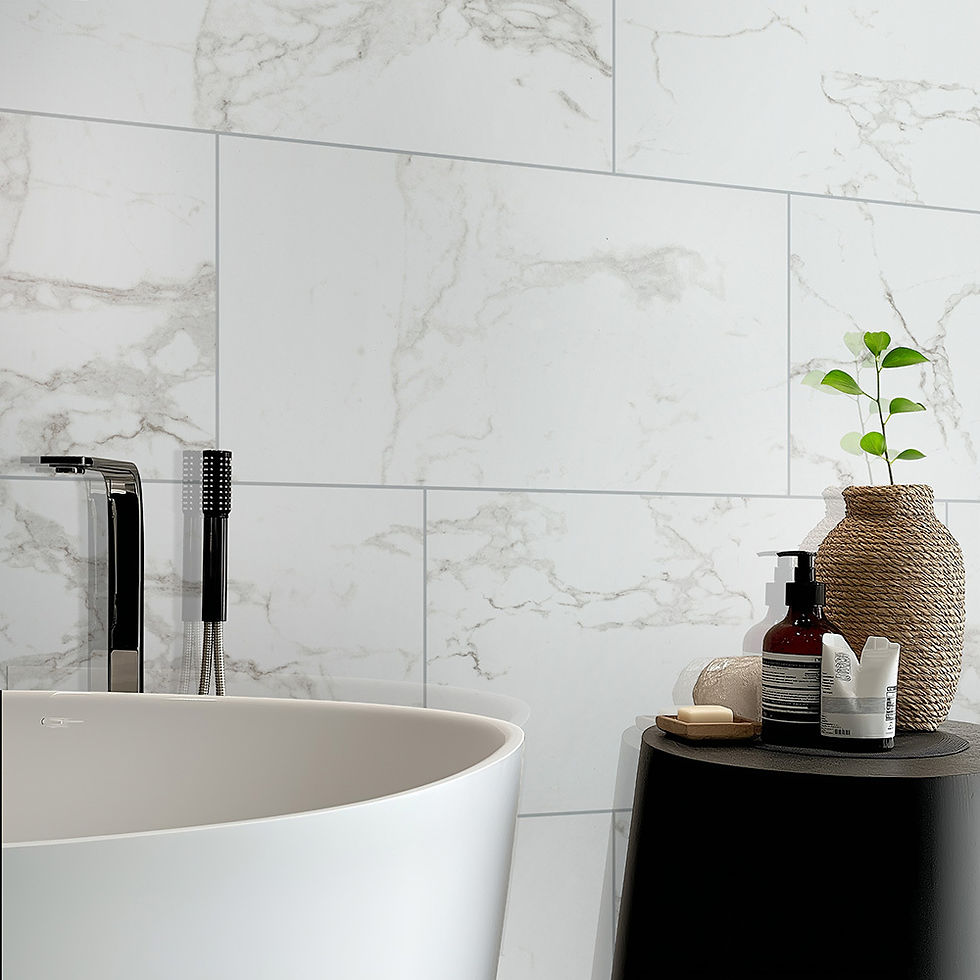
Marble-look porcelain gives you the veining of marble without sealing, and the pattern will not wear away. On the floor, choose it in a matte finish.
White and light tile makes a small bathroom feel larger, but MSI points out that water spots and soap film show up faster on light colors. A matte floor hides small marks between cleanings better than a glossy one.
Wood-look porcelain planks bring the warmth of wood to a bathroom without wood's problems with water. Use them on floors only, in a matte or textured finish. Running the planks the long way through a narrow bathroom makes it read longer.
For more style direction, see our modern bathroom design ideas.
See the tile with your vanity and countertop
Ratings narrow the list, but the final choice is always visual. A marble-look porcelain can look stark on its own and warm next to a wood vanity, and a floor tile that seems dark in a photo can be just right in a bright room.
Our showroom carries MSI tile and flooring alongside our bath cabinetry, so you can put floor and wall samples next to the vanity and countertop you are considering, and ask about ratings before anything is ordered.
Our showroom is at 5426 Tonnelle Avenue in North Bergen, and Sterl Kitchens has been family owned and operated since 1945, serving North Jersey and the surrounding areas. Book a design consultation or call (201) 866-7999.

Comments