
Limestone-Look Countertops: The Soft Stone Look Without the Upkeep
Limestone has a look that is hard to fake: soft, quiet color, a chalky warmth, and very little of the dramatic veining you get with marble. It makes a kitchen feel calm and a little old-world, and it sits beautifully next to painted cabinets and brass hardware.
It is also one of the more delicate stones you can put on a kitchen counter. That is why so many homeowners who fall for it end up choosing a limestone-look countertop in quartz or porcelain instead. Here is what each option gives you, drawing on guidance from MSI, whose countertops we carry.
Why real limestone is hard to live with in a kitchen
MSI describes limestone as a timeless, elegant material that resembles marble. It also points out the catch: natural limestone needs special care. It can be relatively soft, and it may scratch, stain or etch when it meets common kitchen cleaners and foods.
Etching is the one that surprises people. Acidic things like lemon juice, vinegar, tomato sauce and wine can leave a dull mark on the surface that no amount of wiping removes. On a bathroom vanity that sees little food, that can be manageable. On a kitchen island where someone squeezes a lemon every night, it usually is not.
None of that makes limestone a bad stone. It just means the look and the material do not always belong together on the hardest-working surface in the house.
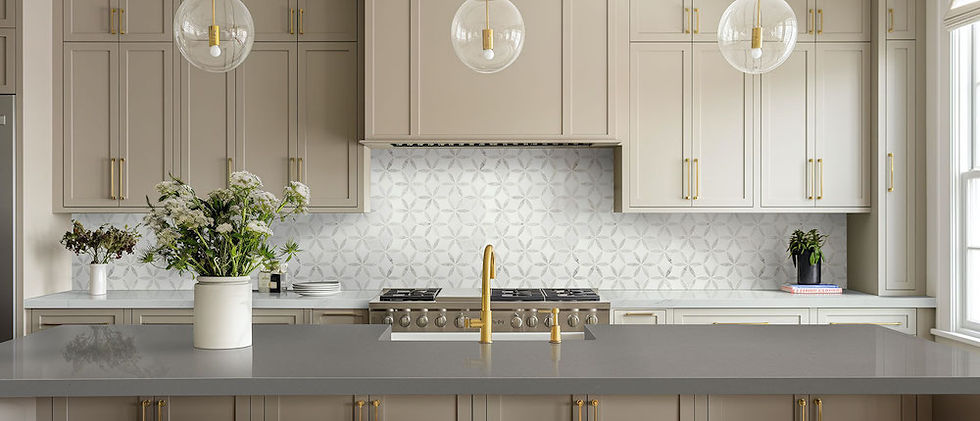
Option one: limestone-look quartz
Quartz is the most common answer. MSI's Q quartz is made from natural quartz, up to 93 percent by MSI's figures, bound with resins and polymers. The result is a non-porous surface that resists stains, scratches, scorching and chips, and unlike natural stone it does not need regular sealing or special cleaners.
That is exactly where limestone falls short. A splash of red wine or a forgotten lemon wedge simply wipes away. For a family kitchen, this is often the deciding factor.
MSI singles out two of its Q colors, Fossil Gray and Concerto, as surfaces designed to imitate natural limestone while delivering the durability of an engineered material. Fossil Gray sits on the cooler, grayer side of limestone; Concerto reads warmer and sandier. If you are curious how quartz is built through the full depth of the slab, our guide to full body vs color body quartz explains the difference.
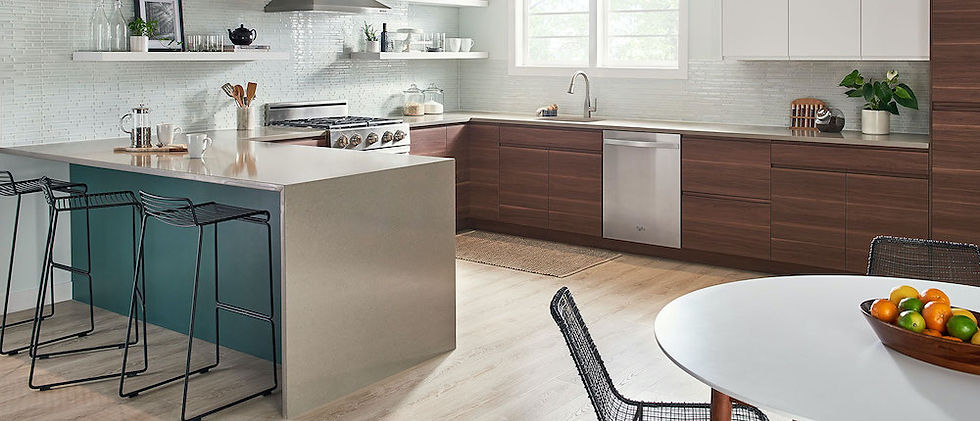
Option two: limestone-look porcelain
Porcelain slabs are the other strong choice, and they bring a different set of strengths. According to MSI, porcelain is non-porous, heat resistant and UV stable, with water absorption of half a percent or less. Those properties belong to porcelain itself, not to a coating, so they hold up for the life of the counter.
Heat resistance and UV stability make porcelain worth a look for a counter next to a range or under a sunny window. Porcelain is also printed with its pattern, which means manufacturers can reproduce the subtle, fossil-flecked surface of limestone in a lot of detail.
For a kitchen countertop, MSI recommends 12mm porcelain as the standard thickness. Thicker-looking edges are made by mitering two 12mm pieces together at 45 degrees, which creates a 24mm edge that looks very much like a solid slab of stone. That mitering is precise fabrication work, so it is worth asking about edge options early.
Quartz or porcelain: how to decide
Both will give you the look. The choice usually comes down to where the counter sits and how you use it.
Choose quartz if you want a proven, low-maintenance surface for an island or a busy prep area, and you like a warmer, solid feel to the slab.
Choose porcelain if the counter sits right next to a cooktop, gets strong direct sunlight, or you want a thin, crisp modern profile with a mitered edge.
Mix them if it helps. Some kitchens use quartz on the perimeter and porcelain on a feature island, or the reverse. As long as the tones are chosen together, the room still reads as one.
Thickness matters too, especially on an island with seating. Our article on 2cm vs 3cm quartz countertops covers overhangs and support.
Get the color right: bring samples home
Limestone looks live in a narrow range of soft grays, creams and beiges, so small differences in undertone matter. MSI's advice for choosing quartz applies well here: bring several samples home and look at them next to your actual cabinets, flooring and wall color. A sample that looks perfect in a showroom can turn pink, green or yellow next to your paint.
Check them under different light, too. MSI notes that a countertop can look different in morning, afternoon and evening light, and under warm versus cool bulbs. Leave the samples on the counter for a few days before you decide.
If you are planning more than the counters, MSI also offers a Kitchen Visualizer for trying countertop colors with different cabinets, backsplashes and floors, and a Countertop Edge Visualizer for comparing edge profiles before you commit.

Pairing a limestone look with cabinets and hardware
A limestone-look counter is quiet by design, which makes it easy to pair. A few combinations work especially well:
Warm painted cabinets in greige, taupe or mushroom tones, with brass or gold hardware, for a soft European feel.
Natural wood cabinets in oak or walnut, which bring out the warmth in sandier limestone tones.
White or cream cabinets, where a slightly grayer counter adds just enough contrast.
Because the counter is calm, it also gives you room to add texture elsewhere, such as a patterned backsplash or textured cabinet pulls. If you are still choosing hardware, our guide on how to choose kitchen cabinet hardware covers finishes and mixing metals. And if you are drawn to the earthy, nature-inspired direction more broadly, our piece on biophilic kitchen design goes further.
Caring for a limestone-look counter
This is the easy part. Quartz and porcelain both skip the sealing schedule that natural stone needs, and everyday cleaning is simple. For the details, see our guide on how to clean quartz countertops.
The one habit worth keeping is the same for any countertop: use trivets for hot pans and cutting boards for knives. A durable surface lasts longest when it is not asked to do a cutting board's job.
See limestone-look countertops in person
Soft stone looks are subtle, and they are always easier to judge in person than on a screen. At our North Bergen showroom at 5426 Tonnelle Avenue, you can compare countertop samples next to real cabinet door samples and see how the tones work together before you choose.
Browse our countertops and kitchen cabinetry, book a free design consultation, or call us at (201) 866-7999 to plan a visit.

Comments